Introduction: The Invisible Breath of the Earth and the Dragon’s Wrath
In the ancient language of landscape Feng Shui (Kan Yu), terrain is never a simple expanse of inert rock and mud, but a living organism crisscrossed by veins of spiritual energy: the Dragon Veins (Long Mai).
After exploring how the Vedic tradition links disaster to Shiva’s trident and the wrath of the mountain gods and how mythic astronomy weaves into Ghivarello’s theory of collective psychic collapse, the Chinese tradition of Feng Shui offers a complementary key: the dynamics between Mountain Dragons and Water Dragons, paired with the myth of their awakened destructive fury.
When a vast glacial portion on the border between Nepal and Tibet collapsed along the Lhende Khola and Trishuli basins on August 26, 2026, we witnessed on a geomantic level the breakdown of the cosmic alliance between the YIN element (rock/mountain) and the YANG element (fluid/water).
1. Mountain Dragons and Water Dragons: The Yin-Yang Balance
In classical Feng Shui (Form School), the earth is read as the body of an immense dragon. The various landforms are manifestations of its polarities:
- Mountain Dragons (Shan Long – Yin): They represent the skeletal structure of the planet, the Yin element (static, deep, conserving). They govern health, population stability, moral strength, and spiritual grounding. The great Himalayan range is considered the ancestral root (Ancestral Dragon) of all Asian Mountain Dragons: it retains Qi (vital energy) and prevents it from scattering.
- Water Dragons (Shui Long – Yang): They represent the circulatory and vascular system of the earth, the Yang element (dynamic, fluid, changeable). They govern wealth, movement, the flow of ideas, and material abundance. Rivers like the Trishuli and Lhende Khola are the arteries through which the Water Dragon distributes vital energy gathered from the mountains down into populated valleys.
2. The Destructive Fury of Dragons in Chinese Mythology
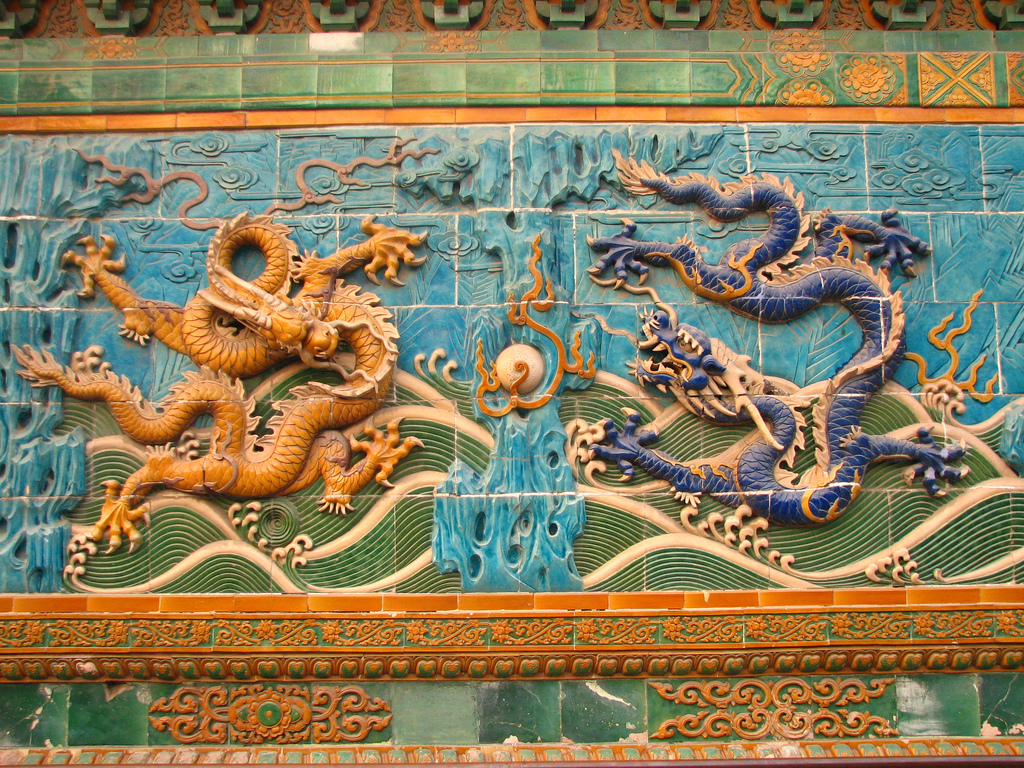
Unlike in the West, where dragons are often portrayed as evil monsters, in Chinese mythology the Dragon (Long) is a sacred and benevolent entity. However, when a dragon is offended or its territory profaned, its wrath is overwhelming and merciless:
- Gonggong and the Collapse of Mount Buzhou: Gonggong (共工), the water god-dragon, driven by blind rage after a defeat, struck his head against Mount Buzhou (不周山), the mountain pillar supporting the heavenly vault (Axis Mundi). The mountain shattered, the Earth tilted to the southeast, and deluge waters devastated the land. This myth stands as the cosmic prototype of a mountain collapse transforming into a water catastrophe.
- The Wrath of the Dragon Kings (Longwang): The four Dragon Kings who rule the seas and rainfall demand respect for ritual balance. When human populations violate sacred grounds, the dragons respond by turning beneficial rain into typhoons, tsunamis, and destructive floods.
- Xiangliu, the Toxic Mud Dragon: Executor of Gonggong’s will, Xiangliu is a nine-headed serpentine dragon whose venomous saliva and path transform crystal rivers into sludge and sterile mud. He is the perfect mythological embodiment of debris flows (GLOF) sweeping through valleys.
3. The Himalayan Collapse: When the Mountain Dragon Turns into Raging Water
When ecological and ritual balance is shattered by land desecration, the nature of the two dragons inverts violently:
- Disalignment of Qi: When the Mountain Dragon loses its stability (the glacier detaches), the Yin element crashes into the Yang element. The solid rapidly transmutes into fluid.
- Transformation into Destructive Dragon (Sha Qi): The river, once a beneficial Water Dragon nourishing the valley, turns into a Dragon of Mud and Death, laden with Sha Qi (destructive energy). The debris flow hitting the Nepalese basins represents the corporeal metamorphosis of the enraged Dragon.
This geomantic transformation aligns directly with readings of Himalayan sacred geography recognized and preserved by the UNESCO World Heritage Centre.
4. Geomantic Synchronicity: Feng Shui and Ghivarello’s Theory
Integrating the fury of Chinese dragons with Sergio Ghivarello’s High-Azimuth Synthesis allows us to understand the synchronic nature of the event:
- Inclination and Inversion: In the high-azimuth method, when 12th House energies (the repressed, hidden water) erupt onto the Vertex (1st House/West), we observe the physical manifestation of a polarity inversion.
- Unconscious of the Landscape: The collective psychic collapse theory teaches that the human Collective Unconscious and the Earth’s Unconscious share the same matrix. The Sha Qi generated by removing sacrality from the Mountain condenses locally, triggering the Dragon’s wrath and the detachment of solid matter.
Comparative Table: Feng Shui Dragons Between Myth and Collapse
| Geomantic Element / Myth | Polarity | Physiological Function | Balanced Manifestation | Destructive Fury Manifestation |
| Mountain Dragon (Shan Long) | Yin | Bones, spine, Axis Mundi | Spiritual stability, health, protection | Landslide, glacial collapse, broken mineral anchor |
| Water Dragon (Shui Long) | Yang | Blood, energy veins | Prosperity, valley fertility | Flash flood (GLOF), debris flow |
| Gonggong Myth (Mount Buzhou) | Yin vs Yang | Pillar of Heavenly Vault | Harmony between Heaven and Earth | Strike to the pillar, axis tilt, and Deluge |
| Xiangliu Myth | Toxic Yang | River flow and marshes | Water circulation | Poisoned rivers, toxic mud, lethal flow |
Conclusion: Reconnecting the Dragon Veins
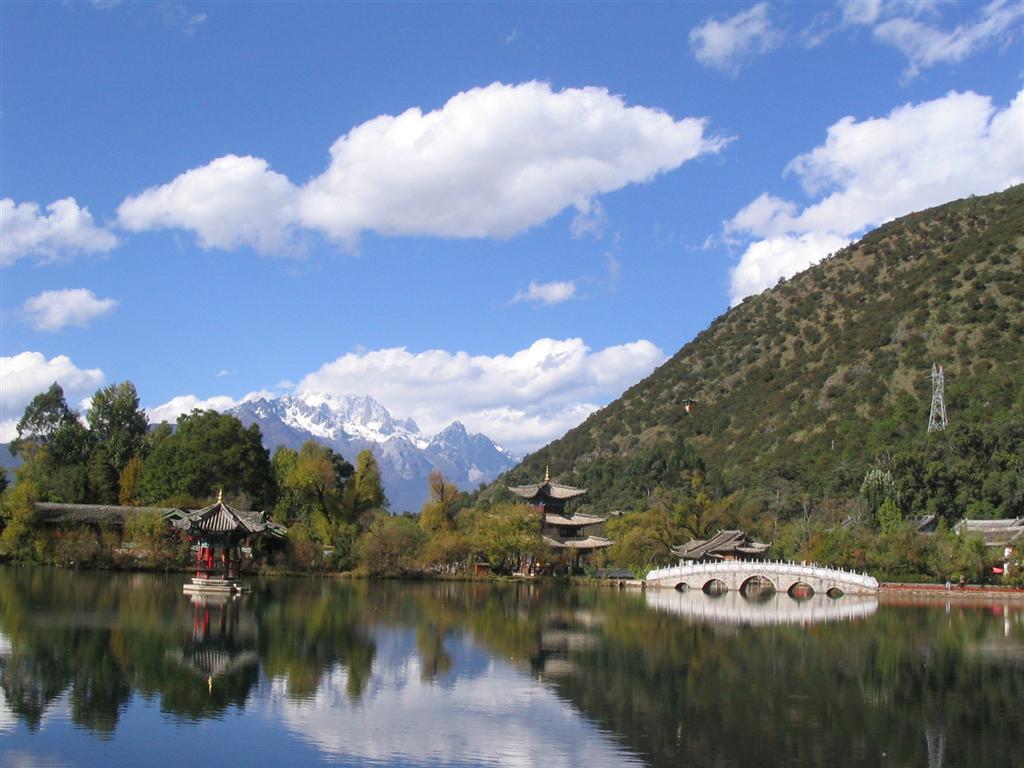
Ancient landscape Feng Shui did not use mathematics to dominate nature, but sacred geometry to listen to its heartbeat.
The disaster in Nepal along the Trishuli reminds us that we cannot extract resources while ignoring the balance between Mountain Dragons and Water Dragons. When Yin solsticial stasis snaps due to a lack of respect for the Mountain Dragon, the Water Dragon responds by bursting its banks: matter becomes enraged flesh, and the Earth demands the restoration of lost harmony.