Introduction: The Charm of the Attic vs. Your Body’s Response
In recent years, interior design trends have fueled a major surge in attics, lofts, and top-floor spaces with exposed woodwork. However, sleeping in an attic bedroom—especially under steep sloped ceilings or heavy exposed beams—frequently degrades our overall sleep quality. The visual charm is undeniable: natural timber, cozy proportions, and sweeping geometric lines evoke a sense of warmth and fairytale shelter.
Yet, when the sleeping area is positioned where the ceiling drops dramatically or with the headboard aligned beneath a massive structural beam, many people experience micro-awakenings, morning neck tension, or a subtle, persistent sense of oppression. To explore how spatial forms shape human cognition, feel free to read my article on The Psychology of Space: How Room Shapes Influence the Mind.
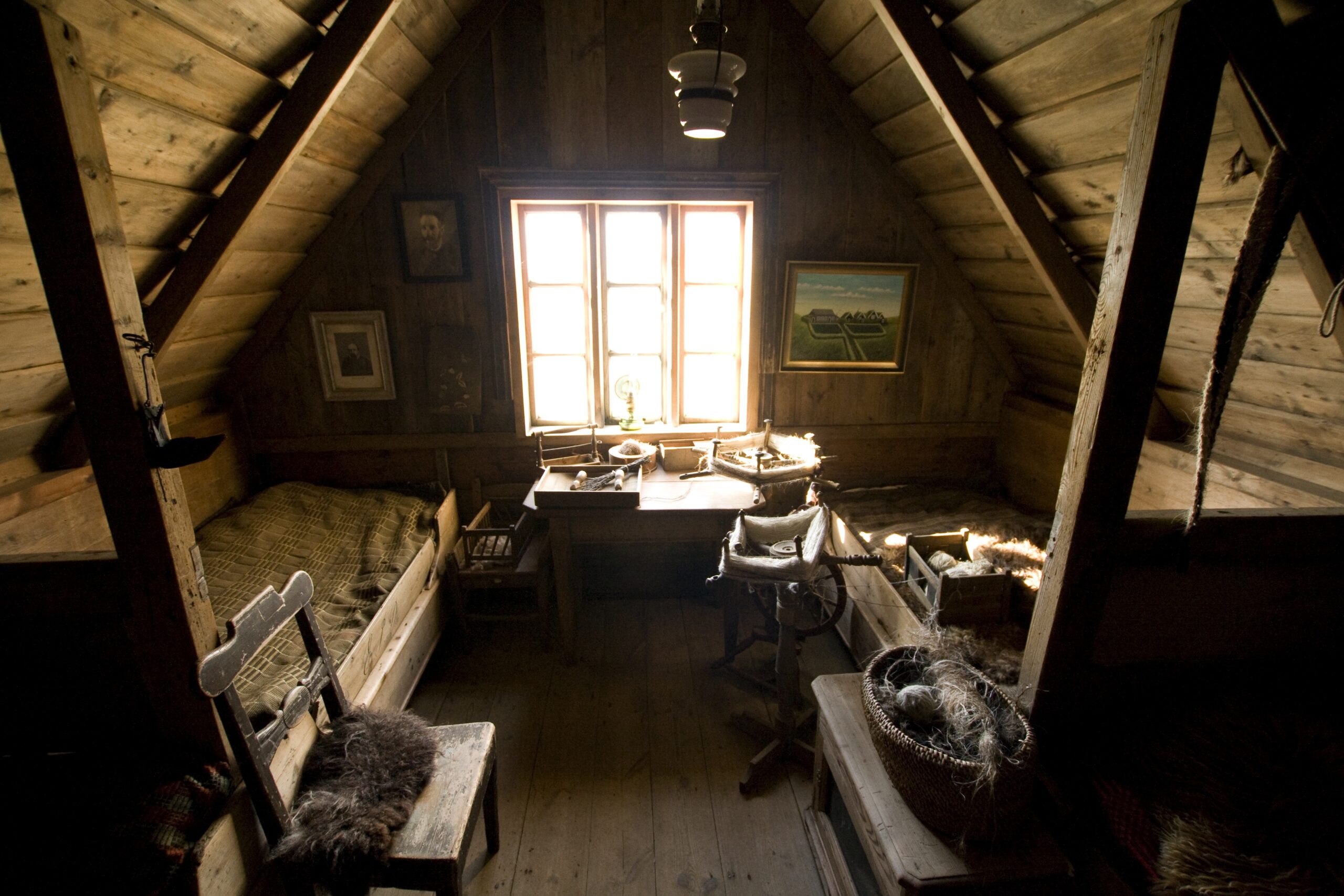
1. Subconscious Claustrophobia: Overhead Beams and Angled Ceilings
While we sleep, our conscious mind powers down, but our most ancient brain structures—particularly the amygdala and the autonomic nervous system—remain vigilant, constantly scanning the environment for potential threats.
This subconscious state of alertness is triggered by two key spatial factors:
- The Suspended Beam: A heavy structure protruding close above the head induces what environmental psychology terms perceived overhead threat. The subconscious mind interprets a massive overhang as a physical collapse risk.
- The Sloped Ceiling: The diagonal plane breaks the vertical symmetry of the room. A ceiling pitching downward toward the bed creates visual compression and spatial claustrophobia, tricking the brain into perceiving the surface as sliding or descending upon the sleeper.
Even when our logical mind knows the structure is entirely safe, our neurobiological reflex maintains a low-grade alarm system that prevents us from sinking into the deepest, most restorative stages of REM and slow-wave sleep.
2. “Secret Arrows” and the Physics of Attic Microclimates
In ancient geomancy and Feng Shui, both protruding beams and sharp angles created by pitch ceilings generate a downward compressive energy known as Sha Qi (or “secret arrows”).
Beyond symbolism, this concept reflects tangible ergonomic and environmental physics:
- Air Compression and Turbulence: The acute angle of a pitched roof combined with structural beams disrupts natural air convection. Air currents get funneled downward rather than circulating freely, creating localized air drafts directly over the sleeping area.
- Thermal Trapping: Heat naturally rises, becoming trapped at the peak of the ceiling or accumulating where the sloped roof narrows. This creates a warm, dry microclimate over the sleeper’s head throughout the night. To review scientific standards on indoor microclimates and environmental air quality, refer to the publications by the International WELL Building Institute.
3. Practical Solutions: Releasing the Spatial Pressure
If your bed is situated under exposed beams or sloped ceilings, several effective strategies can restore visual and psychological comfort:
A. The Classic Feng Shui Remedy: Bamboo Flutes
One of the most effective traditional remedies to counter beam pressure is hanging two bamboo flutes (or natural bamboo stalks) directly on the beam. Position them angled at 45 degrees toward each other, with the mouthpieces facing downward.
- How it works: The two flutes form an upward-pointing triangle. This geometry creates a virtual extension that projects the eye’s perception above the horizontal line of the beam, visually “lifting” the overhead pressure and redirecting spatial energy upward toward the roof ridge.
B. The Fabric Canopy under Sloped Roofs
If your bed must remain under a low sloped roof or heavy beam, suspending a lightweight linen or cotton cloth to create a soft canopy or horizontal drape effectively conceals the slope and heavy mass from your subconscious view. Removing the sharp angle or slope from your visual field allows the nervous system to relax immediately.
C. Upward Lighting (Uplighting)
Installing warm LED strip lighting or wall sconces that direct light upward where the wall meets the sloped ceiling visually expands the space, softening the slope and relieving feelings of claustrophobia.
D. Strategic Bed Placement
The golden rule for attic spaces is to invert common layouts: place the headboard beneath the highest point of the ceiling (under the roof ridge) and reserve the lowest, sloped areas for low storage units, bookshelves, or custom cabinetry.
Conclusion: True Design is Measured by Well-Being
Design trends change continuously, but the fundamental ways our body and mind react to spatial geometry have remained unchanged for millennia. Designing an attic bedroom with awareness means looking past a picturesque photo to listen to your body’s physiological responses—transforming your sleeping space into a true sanctuary for rest and regeneration.